The ecommerce B2C business is expected to reach $1.77 trillion in 2015…WOW! This market is growing at 20%+ per year and putting many challenges on the infrastructure that supports the selling... View More
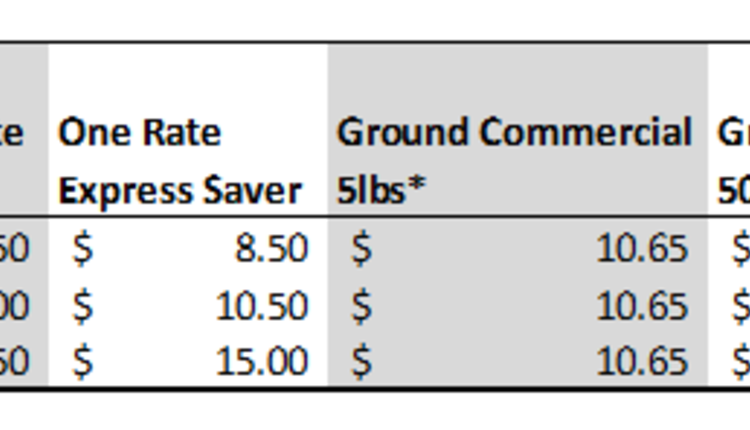
How many of you just read that title and thought, “What do you mean ‘versus’? The fee isn’t the same?” Not only is it not the same, but also the Ground Residential fee carries... View More
Supply chain visibility is a hot trend in many organizations today. The ever-increasing need for visibility is due to the increase in supply chain complexity. There are many issues organizations face including... View More
Last summer, PARCEL published an article I penned called Space. Expansion of what could easily become the world’s biggest industry with brand new boundaries, apparently plenty of capital, vision... View More
There’s big news coming from UPS, FedEx and USPS. It’s news that may make you re-evaluate your shipping strategy. As you know, every year the “Big Three” raise their rates.... View More
Parcel volumes are on the rise as noted in recent earnings reports from the two largest U.S. based parcel carriers, FedEx and UPS. Ecommerce is driving much of this growth and both parcel carriers, along... View More
The 2013 holiday shipping nightmares stemmed from the perfect storm of record-breaking weather, combined with retailer over-promises and carriers taking on more last-minute parcels than they could handle.... View More
Shippers, here’s part one of a Top Ten list that’s not at all funny! (Look for part two in the November/December issue). Having met with thousands of parcel shippers over the past 25 years,... View More
If you’re not convinced there are dangers posed by the lack of competition in the US small parcel market, please read the transcript from FedEx’s earnings call on March 19, 2014. Near the end... View More
As this issue of PARCEL goes out to the readers, PARCEL Forum 2014 is just a few days away. I will be making a presentation at the Forum entitled, “The Five Most Important Things to Know about the... View More
Packing is a critical operation in any order fulfillment operation, but, often, it is overlooked as a function that can contribute to the overall success of the enterprise. No matter how efficient the... View More
The world is ever-changing, and many times, people are unaware of the change until they are smacked on the side of their head with it. For instance, look at the newspaper industry; many newspapers didn’t... View More
Customer satisfaction and service are likely key performance indicators for your omni-channel retail organization. As a transportation leader, that means you are helping to ensure the right product reaches... View More
Summer’s dwindling down, so it’s the perfect time for shippers to get ready for the holiday season. The holidays are undoubtedly the most pressure-packed time of year for retailers, as most... View More
For many US companies, manufacturing products in Asia is the most cost-effective method. Goods manufactured in China, Indonesia, Vietnam and elsewhere are imported in ocean containers. These goods are... View More
LONG BEACH, Calif. — DENSO ADC, the Americas sales arm of DENSO Wave Incorporated, inventor of the QR Code®, announced a new SE1-QB Bluetooth® wireless 2-D barcode scanner. The lightweight... View More
This is the time of year when the temperature starts to fall and parcel prices are ready to rise, based on the annual hikes announced by UPS and FedEx. Shippers can’t control the new rates set by... View More
The recent announcement from FedEx and then UPS about charging dimensional weight for ground shipments is becoming a game changer in the parcel industry. It is interesting that both these announcements... View More
In early May, FedEx announced it was moving to dimensional weight pricing for all ground shipments in 2015. Signaling a possible shift in how carriers price shipments, the move left many shippers wondering... View More
Google X is Google’s R&D department that is heavily veiled and concentrating on “moonshots,” which it depicts as something that is totally innovative; potentially an enormous new revenue... View More